
Publié le 20 juillet 2026 · 6 min read
For this week’s No More Ls column, we’re looking at how market volatility can affect our financial decisions—for better or worse.
You’re not alone if your heart rate’s been a bit elevated lately. Even as the stock market rises, doom-laden headlines warn of an AI bubble and a potential market correction. The value of commodities, bonds and stocks fluctuates, as always.
De notre commanditaire
-AEkqtheTBVzQakrLgVbzKxJhcfRhND.png&w=1920&q=75)

Economic, geopolitical and trade troubles keep ratcheting up tension, as well. The problem is that hasty, anxiety-fuelled investment decisions or even paralysis can cost you. So, use this nine-point plan to stay calm and grow your wealth, no matter what that stock newsletter says today.
1. Understand that market volatility is mid
“Short-term fluctuations are normal parts of financial markets and should be expected when making equity investments,” says Ben Mayhew, CFP and founder of Aergo Financial Planning, an advice-only planning firm in Halifax. He notes that the recent volatility is well within historical norms, and no cause for rash moves. “The primary risk of not staying calm is selling at a low and missing out on gains after volatility or a substantial correction. It’s extremely detrimental to your long-term financial health.”
2. Check yourself
Feeling a bit panicky about your portfolio? Take a breath and acknowledge when you’re falling prey to common investing thought traps. Maybe you’re assuming things will unfold like last year (recency bias), suddenly jumping on a stock because everyone else is (herd mentality bias), or chasing a stock because you read it’s amazing (overconfidence bias).
A well-balanced portfolio can protect you from biased thinking like this, so talk to a planner to regain perspective.
3. Recognize your money script
You can’t control the markets, but you can control how you choose to react to financial ups and downs.
A first step is to recognize that your emotional responses to money issues often reflect attitudes formed in childhood, such as a fear of instability or of making mistakes.
“Panic-selling during market downturns, compulsive account checking, chronic over-saving, avoidance of financial conversations, difficulty trusting a partner financially—these frequently have far less to do with intelligence and far more to do with how the nervous system experiences uncertainty,” writes Olena Keshysheva, a certified financial behaviour specialist, CIM, CFP and founder of Sapling Wealth & Wellness in qathet, B.C.
Keshysheva’s dual focus helps couples and individuals understand their money scripts (unconscious, trans-generational beliefs around money) and then develop a customized financial plan. This helps clients be more intentional and less reactive. Consider talking to a financial therapist or behaviour specialist if some of the responses she describes sound familiar.
4. Circle back to your goals
If your your recent stock pick is plummeting along with your mood, remind yourself of what you want to achieve long-term with your money.
Time in the market beats timing the markets. Steady investment contributions over time yield compound interest and wealth. Recalling that, along with your dreams of travel or early retirement, can hold you back from impulsive financial moves.
5. Invest in advice
Once you’ve given some thought to your life goals and reflected on some of your money attitudes, you’re in a good position to create a personalized plan with a financial professional. This can keep you grounded and discourage emotional investing that doesn’t pay off.
A diversified portfolio with different investment types will also protect you against market volatility, because you won’t be overly dependent on the performance of a single country, sector or company.
Be candid about your risk tolerance. Higher-risk choices may yield bigger returns but shred your nerves. A plan that respects your comfort level helps you stay on track with peace of mind, says Mayhew, adding, “Sometimes the right answer is to take no investment risk!”
And don’t get nervous if your investment choices are different from other people, either, because your plan is unique to your needs, income and years until retirement.
These days, millennials will likely have more equities in their mix, for instance, while gen-Xers often have more fixed-income investments, and that’s appropriate for their current age and stage. (The Rule of 110 is one easy way to get a sense of how much of your portfolio should be in the stock market: Minus your age from 110 to get the percentage you could allocate to stocks.)
6. Automate investment contributions
Setting up regular, fixed contributions to your brokerage account, registered retirement savings plan (RRSP) and tax-free savings account (TFSA)—regardless of market fluctuations—removes the burden of deciding when to invest and the temptation to wait for the “perfect time,” says Keshysheva. Using this practice of dollar-cost averaging (fixed contributions), your scheduled payments buy more shares when prices are low and fewer shares when prices are high, which can lower your average cost per share. In contrast, lump-sum investing can offer higher returns, but also higher stress.
The “set it and forget it” aspect of scheduled contributions keeps you from obsessing about numbers that inevitably rise and fall. As Mayhew says, “Anything that helps you avoid looking at the values frequently is a good habit.”
7. Tune out for a change
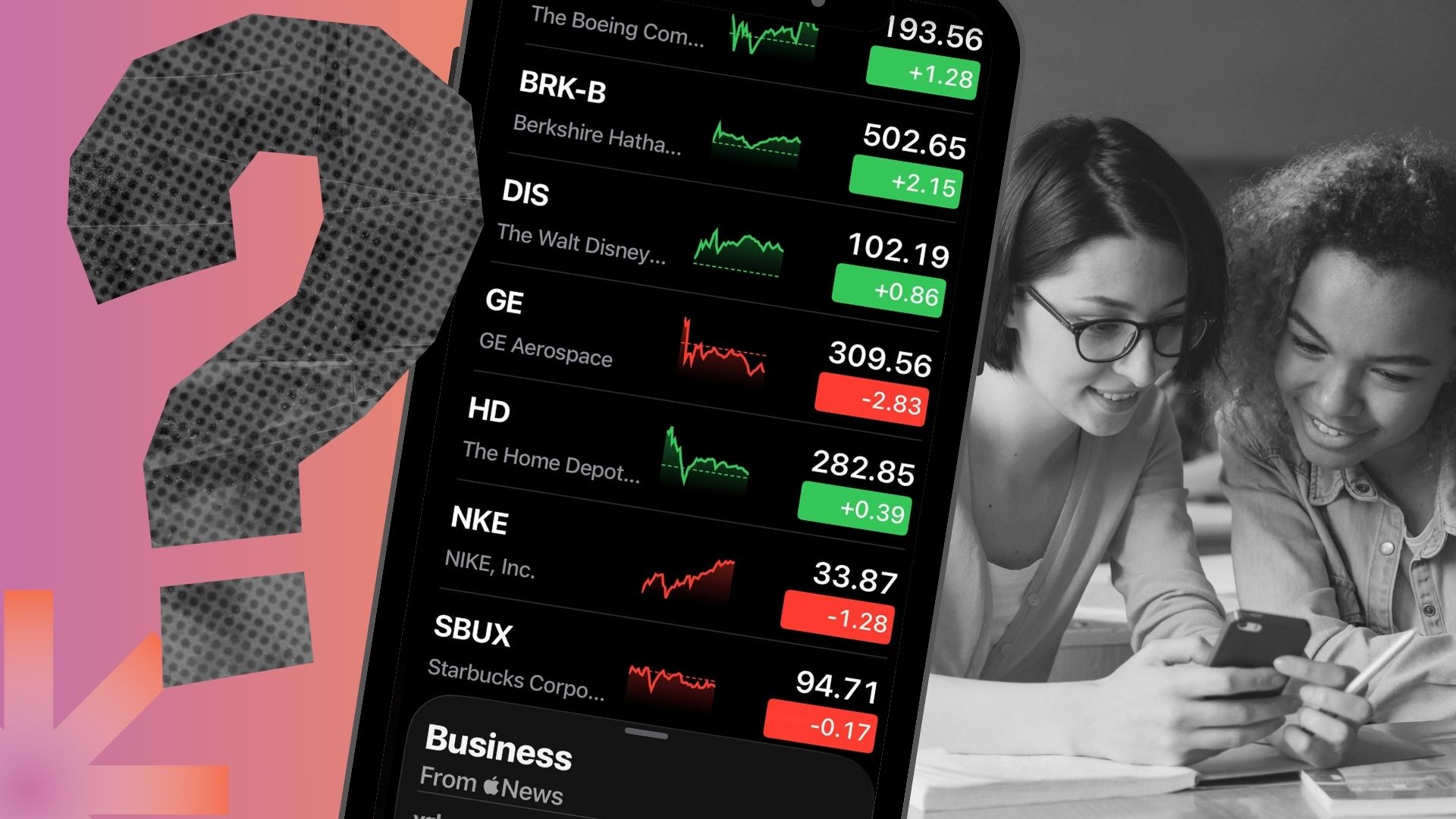
Check credible news sources just once a day or every few days for broad financial trends, rather than minute-by-minute stock swings. Opening your investing apps for stock and financial updates every five minutes isn’t helpful for your mind or your portfolio, because it can lead to fear-driven buying or selling.
“Numerous studies show that the less people pay attention to prices and news, the better their performance,” says Mayhew.
8. Build a financial cushion
Market downturns feel extra scary when you’ve invested every spare penny. With no breathing room, you may make sudden, ill-advised investment decisions. Keeping an emergency fund worth about three to six months salary can help dial down stress.
“Sometimes people panic because they don’t leave enough cash in their pockets,” says Keshysheva. “So, building safety into your financial plan is critical. A lot of financial planners will optimize for numbers, but they can’t optimize the nervous system with a spreadsheet.”
9. Say “om”
You already know that meditation, exercise and time in nature reduce stress, but you may not realize they can benefit your financial mindset, too. You can even listen to calm trading music (above).
“Personally, yoga twice a week has been a great way to decompress from both financial and general anxiety,” says Mayhew. And Keshysheva recommends spending time on what you can control, from meditation and mindful walking to saving and spending less time on investing sites. Otherwise, anxiety and constant exposure to market noise can make you less focused and more reactive.
“Noise is one of the greatest threats, not only to financial well-being, but to mental well-being as well,” says Keshysheva. “The goal is not to ignore what’s happening. It’s to create enough space from the noise that we can remain grounded, think clearly, and make decisions that align with our values and long-term intentions.”
Read more from this issue of The Get:

Lisa Murphy
Lisa Murphy is a Toronto-based writer and former editor whose work has appeared in Reader’s Digest, The Globe & Mail, Chatelaine, Best Health and elsewhere. As a certified life and wellness coach, she loves sharing information that helps readers optimize their life.


The Get is owned by Neo Financial Technologies Inc. and the content it produces is for informational purposes only. Any views and opinions expressed are those of the individual authors or The Get editorial team and do not necessarily reflect the official policy or position of Neo Financial Technologies Inc. or any of its partners or affiliates.
Nothing in this newsletter is intended to constitute professional financial, legal, or tax advice, and should not be the sole source for making any financial decisions. Past performance is not a guarantee of future results. Neo Financial Technologies Inc. does not endorse any third-party views referenced in this content. Always do your due diligence before deciding what to do with your money.
© 2026 Neo Financial Technologies Inc. All rights reserved.