
Publié le 5 octobre 2026 · 6 min read
For this week’s Reality Cheque, we’re looking at the money myth about what being rich looks like—and doesn’t look like.
What does a millionaire in Canada look like these days? Online, you might be bombarded by flashy cars in the driveway and a social media darling dripping in the latest designer clothes. Maybe those vehicles sit in front of a big house, and the people that live there take five-star vacations, only packing the latest and greatest of everything. Wealth could, however, look like a paid-off 13-year-old Honda Civic, at least a million dollars net worth, and a home with little to no mortgage.
De notre commanditaire
-AEkqtheTBVzQakrLgVbzKxJhcfRhND.png&w=1920&q=75)

Stealth wealth, or having significant assets and financial security without advertising either, can be tricky to spot and even trickier to write about. The folks who have it aren’t exactly lining up to share the good news, which is why those here have agreed to do so anonymously.
For many financially comfortable Canadians, wealth has very little to do with looking the part or getting rich quick. Instead, it can look remarkably ordinary: an older phone, most meals made at home, a modest home, a willingness to drive a used car for years, and giving your money the time to grow with a long game.
What it takes to save $2 million
Take Catherine, a recently retired 59-year-old senior manager at a large bank. Her net worth is above $2 million, but her path to getting there was less about huge financial windfalls and more about years of dedicated, unglamorous financial decisions.
She bought a condo as soon as she could afford the payments, using a severance payment from her first “real job” as a down payment. She contributed to her registered retirement savings plan (RRSP) as soon as she could, participated in her employer’s pension and stock purchase plan, educated herself about money, kept debt low and eventually hired a financial advisor to manage her investments. And then there’s her car. “I had my Honda Civic for 13 years,” she says.
Her spending priorities today are different from what you might expect. She and her husband splurge on entertaining, good wine and food, but buy gently used vehicles, keep their phones until they die and limit streaming services. They don’t exchange gifts on Christmas, anniversaries or Valentine’s Day. “We don’t have video game consoles, Yeti mugs or coolers, or the newest TVs or fancy surround-sound equipment,” Catherine jokes. They rarely go to movies, reuse their holiday decor and aren’t interested in acquiring a lot of stuff.
For Catherine, stealth wealth is about money building “slowly, bit by bit over the years until, very suddenly it seems, you’ve accumulated a tidy sum.”
How an entrepreneur grew his net worth to $10 million
Steve and Karen, a couple in their 50s, took a different route. Their net worth is approximately $10 million, built largely through entrepreneurship. Steve gradually took over a multigenerational farm from his father, before vertically integrating it with an idea Steve had for a food business.
“Starting (the food business) from nothing isn’t easy and certainly not for everyone,” he says. “This was also a time when I was coming back to a deeper, more meaningful faith. My entrepreneurial experience was more about building my faith and character than it was about success,” explains Steve.
Their home is a modest, two-century-old farmhouse; they rarely buy new cars, preferring to let someone else absorb the depreciation hit, and they reinvest much of their money into the business. For them, wealth isn’t something to display, or even necessarily discuss. “Karen and I prefer to not discuss this so that it doesn’t change how people look at us, accept or relate to us,” says Steve.
They also don’t want to be “bombarded with charitable requests,” preferring to support organizations they already know and value. Their money is directed toward family, the business and causes they care about. The result is a $10-million net worth that doesn’t necessarily look like one.
What else does stealth wealth mean to them? “It’s about building meaningful changes to those that are in need, and that can be locally or internationally—but wealth in my humble opinion should never be hoarded or boasted about. If there’s one thing I do boast about, it’s how my relationship with God has blessed myself, my family, my employees and our community. For me, it’s not about me, but Him,” says Steve.
Starting over in Canada to live the Canadian dream
Then there’s Dave and Helena, a retired couple whose approach to wealth has been shaped by risk, learning from mistakes, and a strong sense of independence. They arrived in Canada as new immigrants from South Africa in their late 20s with basically no money. Dave, a former engineer, had already discovered that he was comfortable taking financial risks. In his 20s, he put years of pensionable savings into a diamond-mining venture in Angola. Although the mine was producing, political upheaval and the violent takeover by UNITA rebels ultimately wiped out their investment.
Starting over in Canada didn’t change his appetite for calculated risk, however. Instead, he learned everything he could about investing, teaching himself about stocks, observing other investors and absorbing lessons from mistakes, including losses during the 2007-09 financial crisis. Today, Dave, worth more than $5 million, sees investing less as a way to accumulate the biggest possible number and more as a route to independence. “As a kid, I wanted to be a millionaire,” he says. “Later on, I evolved that as: I want independence.” (Read about the FIRE movement.)
That philosophy shapes how he and Helena live. They spend much of their discretionary money on travel rather than possessions and have little interest in appearing wealthy. “Ego is the most expensive quality you can have,” Dave says, adding, “Once you get rid of ego, and you go with what centres you, it becomes a very different life.” For Dave, stealth wealth is ultimately about having freedom without the performance of wealth.
Lessons from the stealth wealthy
Although each of them took a different path to their own financial security, none defines wealth simply as earning a high income or buying expensive things.
Catherine built it through decades of steady saving and investing. Steve and Karen built it by adapting a family business and reinvesting. Dave and Helena took greater investment risk and focused on financial independence.
All point to a broader lesson: There is no single formula or path to attaining the Canadian dream. Building financial security still depends on the basics, which include earning power, disciplined saving, investing and making the most of any opportunity as it arises. Luck, timing and circumstance will always play a role, and everyone will be dealt a different set of cards. The key is to leverage what you can control, like living below your means, using tax, saving and investment tools to your advantage and adjusting to circumstances as they change.
For younger Canadians, the modern Canadian dream might be something different like having enough financial stability and flexibility to choose where you want to live, how you work and what matters to you. The road may look different to the ones previous generations followed but the goal remains the same: build a financial base that gives you more choices, not less.
Which brings us back to that 13-year-old Honda Civic. If nobody knows you’re wealthy, and more importantly, if you don’t need them to know, you may have found something more valuable than looking rich: the freedom that comes from being financially secure.
Read more from this issue of The Get:
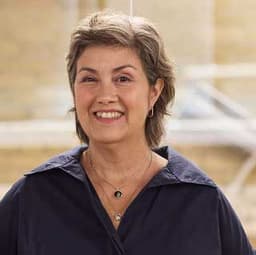
Mary Luz Mejia
Mary Luz Mejia is a freelance journalist, food and travel writer and Canada’s first IICCT Level III Certified Chocolate Taster.


The Get is owned by Neo Financial Technologies Inc. and the content it produces is for informational purposes only. Any views and opinions expressed are those of the individual authors or The Get editorial team and do not necessarily reflect the official policy or position of Neo Financial Technologies Inc. or any of its partners or affiliates.
Nothing in this newsletter is intended to constitute professional financial, legal, or tax advice, and should not be the sole source for making any financial decisions. Past performance is not a guarantee of future results. Neo Financial Technologies Inc. does not endorse any third-party views referenced in this content. Always do your due diligence before deciding what to do with your money.
© 2026 Neo Financial Technologies Inc. All rights reserved.