
Publié le 27 avril 2026 · 5 min read
For this week’s top story, we’re taking a closer look at how rising fuel prices are impacting your grocery bill—and whether a new federal government initiative will actually pay off for Canadian households.
Who doesn’t love free money? For Canadians feeling a tightness in their chest at the checkout and the pumps, the new Canada Groceries and Essentials Benefit offers a brief reprieve, as does the federal gas tax suspension.
De notre commanditaire


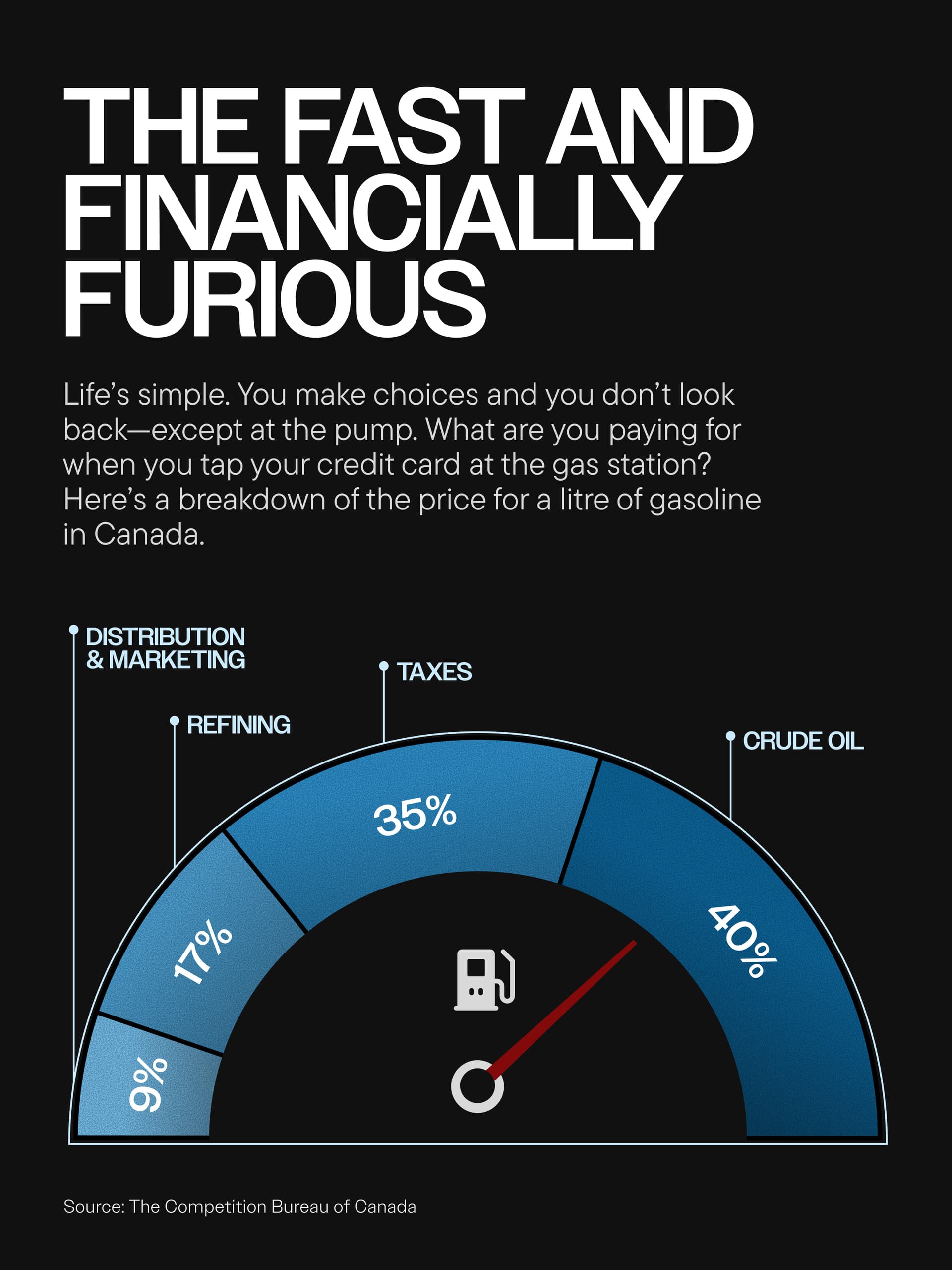
The one-time top-up—up to $717 for eligible Canadians receiving the GST credit—is designed to ease rising living costs. (To qualify, you had to have filed your 2024 income tax return and you received the GST/HST credit in January, according to the Canada Revenue Agency.) The federal government also temporarily suspended the federal fuel excise tax (about 10 cents per litre) until September 7, 2026.
While the top-up payment may help in the short term, economists say it does little to address the main driver behind stubbornly high grocery prices: fuel costs rippling through the entire food system. The relief is much appreciated, but Canadians need bigger noise. Not just the sound of a few coins but the thud of paper bills.
What’s happening to food prices? Will they ever come under control?
Not until the cost of fuel comes down. Food production and transportation costs are both directly affected by gas and diesel prices, and those costs feed into what consumers pay at the till, says University of Alberta professor Ellen Goddard, who specializes in agricultural marketing and economics.
What’s going on with fuel—and how long will it affect food prices?
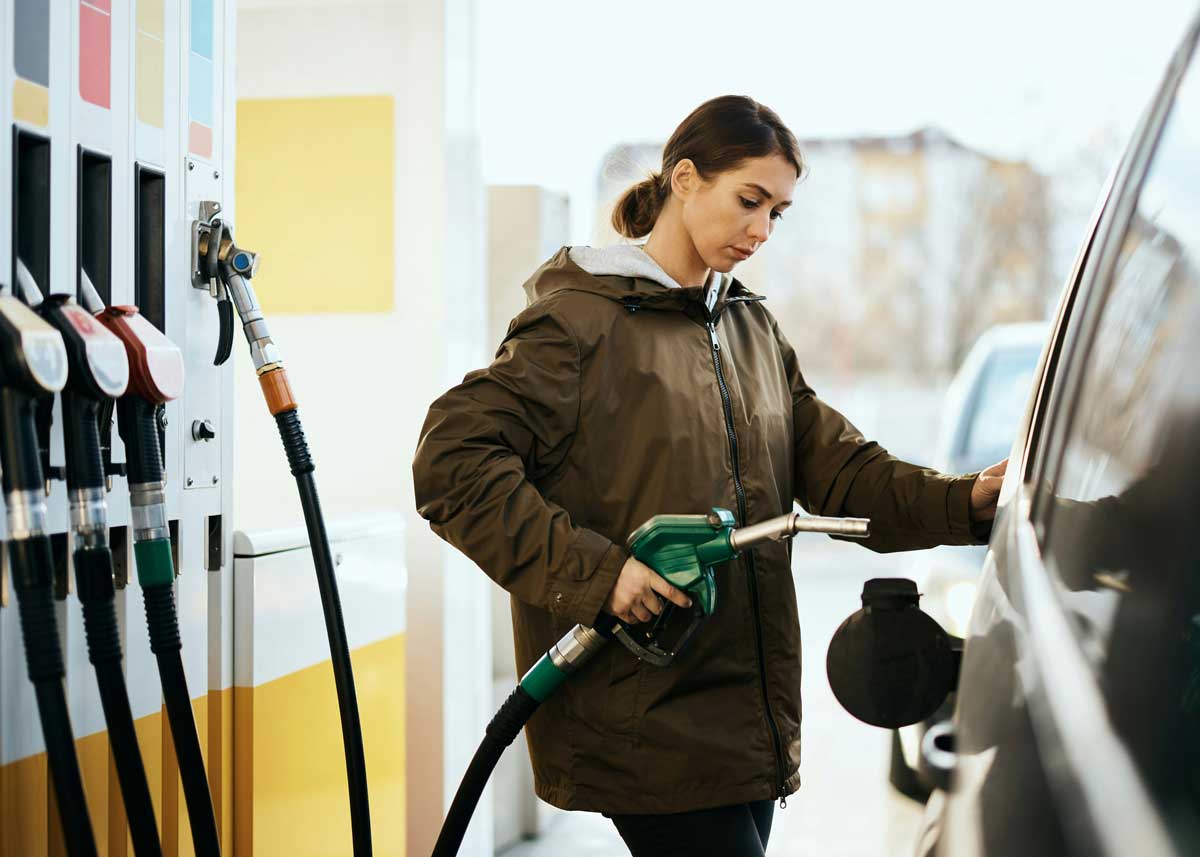
At a time when global energy markets remain volatile (ahem, that war in Iran remains the main catalyst for shifting gas costs), fuel costs are shaping grocery prices in ways most consumers never see—and are making household budgets feel increasingly unpredictable. Economists say the pressure from energy uncertainty isn’t likely to ease anytime soon.
“There is an impact that comes in multiple waves, a ripple effect,” explains Pascal Thériault, a senior faculty lecturer in the Faculty of Agriculture and Environmental Sciences at McGill University. “Any increase in fuel prices increases the cost of agricultural commodities, such as grain to feed chickens, and higher energy costs result in higher processing costs.”
As crude oil prices hover around $100 a barrel, the effects extend well beyond the gas pump. Diesel, critical for transporting food across Canada’s expansive geography, continues to drive up costs at every stage of the supply chain, from farm to processing facility to distribution centre to store shelf.
The result is a compounding effect that’s difficult to contain—and even harder for consumers to outpace. For many, managing grocery costs can start to feel like a Gordon Ramsay service challenge: intense, relentless, and nearly impossible to win for long.
Check out this handy explainer on how to tell when gas prices are going up.
How rising fuel costs add up at the grocery store
Rising grocery prices aren’t driven by a single factor, but fuel plays a central role in shaping costs long before products reach the shelf. When food producers “have to pay an extra $200 to move product from Manitoba to Toronto, the companies can’t absorb the cost. It goes into product prices, and the final consumer will be charged more,” explains Goddard.
While transportation is the most visible factor to blame for high prices, fuel costs run through the entire system—from powering farm equipment to processing, refrigeration, and distribution. As those expenses rise, they accumulate quietly before appearing at the checkout.
That impact isn’t evenly distributed in the store. “For Canadians, any [imported] fruits and vegetables will see an increase the most,” says Mehmet Dalkir, an economics professor at the University of New Brunswick, adding that frozen foods may also see similar increases, as energy-intensive transport adds pressure behind the scenes.
Can shopping local save you money?
Yes, as there’a some seasonal relief on the horizon. “Summer is coming, and that’s when we have an abundance of fresh vegetables and fruits from local producers who are less dependent on transportation,” says Dalkir. He expects produce price increases to correct themselves by the fall of 2026.
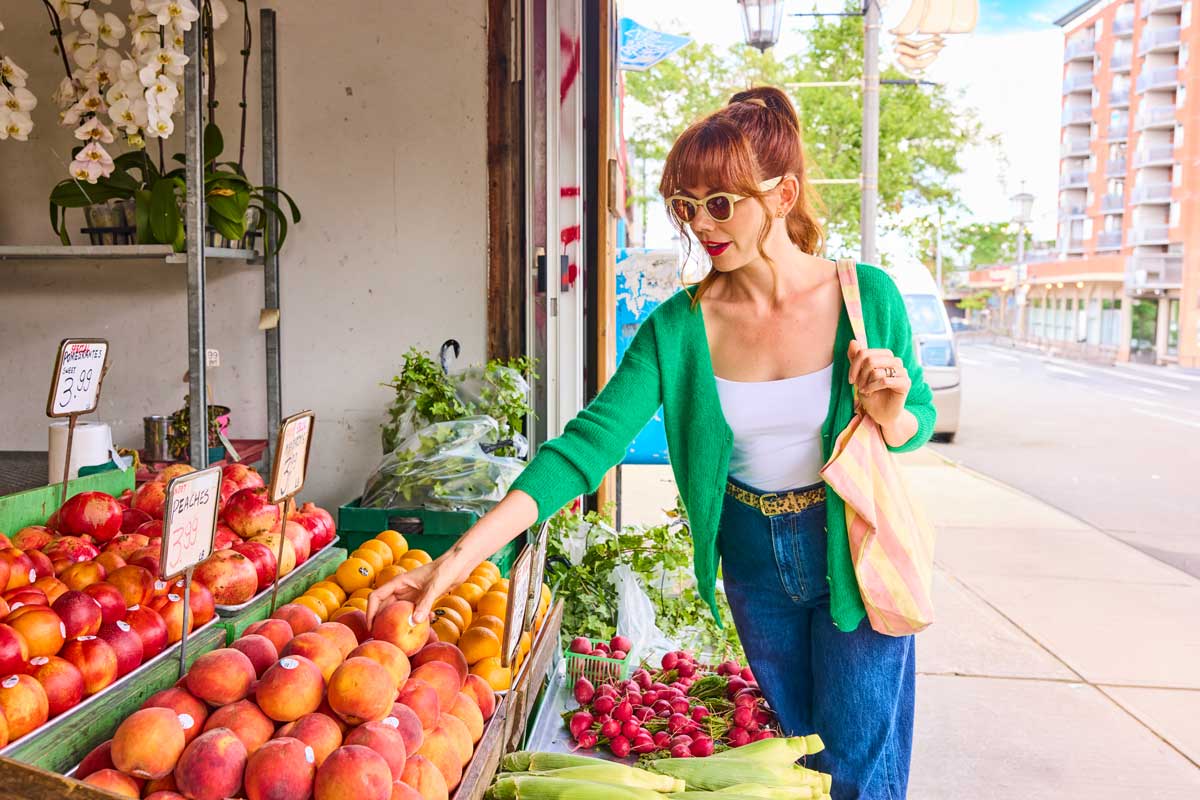
Buying local doesn’t mean growing your own food, right? It simply means choosing products that travel shorter distances, reducing transportation needs and diesel use. “I look at local a little differently; it can be from anywhere in Canada,” explains Goddard. “In Ontario, the Holland Marsh will soon have full production, and here in Alberta, I consider the peaches I enjoy from British Columbia to be local.”
Remember when Canadians went “elbows up” at the grocery store, looking for products that were truly made or grown in Canada? Same thing goes here. Just look for food originating a bit closer to your province or territory to see the differences in cost.
Will the relief last or just buy time?
While the government top-up efforts may offer short-term relief, economists say the underlying pressures on food prices are likely to persist. Fuel-driven costs continue to move from production and transportation to the grocery shelf, keeping affordability a moving target for many households, a bit like trying to keep pace in a Top Chef Canada elimination challenge where the rules—and the clock—work against you.
As Goddard says, fuel prices can shift quickly, but their impact on food costs tends to linger. “I am hoping we are over the worst, but the impacts on the food industry take longer to come into effect and don’t seem to drop off as quickly once the fuel prices have gone down.”
For consumers, that means the pressure on grocery budgets is unlikely to disappear anytime soon. We shouldn’t expect a quick reset with a system that’s still catching up to itself.
Hopefully soon we will appreciate the sound of dropping groceries on the counter, without getting distracted by the total on the bill. Hopefully.
Read more from this issue of The Get:
Anna Lee Boschetto
Anna Lee Boschetto is a freelance writer based in Ontario. Her work has appeared in iRun Magazine, Wander Magazine, and In The Hills, covering lifestyle trends, travel, and smart everyday tips.

The Get is owned by Neo Financial Technologies Inc. and the content it produces is for informational purposes only. Any views and opinions expressed are those of the individual authors or The Get editorial team and do not necessarily reflect the official policy or position of Neo Financial Technologies Inc. or any of its partners or affiliates.
Nothing in this newsletter is intended to constitute professional financial, legal, or tax advice, and should not be the sole source for making any financial decisions. Past performance is not a guarantee of future results. Neo Financial Technologies Inc. does not endorse any third-party views referenced in this content. Always do your due diligence before deciding what to do with your money.
© 2026 Neo Financial Technologies Inc. All rights reserved.