
Mis à jour le 8 juillet 2026 · Publié le 6 juillet 2026 · 6 min read
For this week’s Top Story, we’re looking at different personalities and how they shape the way people deal with finances.
Would you rather check out Mo Vlogs in a Porsche 911 GT3 on TikTok or learn how to max out your TFSA with Alyssa Davies? Your answer, or even knowing who Mo or Alyssa are, may reflect your current financial type—and the opportunities to give your net worth a glow-up. Our money attitudes can help or hinder our ability to make bank, after all, and the sooner we become aware of them, the better.
Read on to decide which money personality type best describes you today and learn how to adjust your spending, saving and investing accordingly.
Your financial evolution
“We can make financial behaviour changes by understanding who we are and creating guard rails to keep us on track,” says Allen Lin, a certified financial planner and co-founder of CanPlan Financial in Vancouver. But keep in mind that the financial personality that best describes you today will likely evolve over time and in different circumstances—good or bad. You may also see some of your money attitudes in several categories below, and that’s OK. We contain multitudes, after all. These types simply offer a broad jumping-off point for you to create a highly personalized financial strategy.
“It provides a place to start,” says Lauren Jeffery, a psychotherapist, financial therapist and founder of Point Shift in Toronto. She helps people develop emotional financial literacy, so they understand the context behind their money choices and make better ones. Our attitudes about money often stem from our early life, family or peers.
Type 1: The financial avoider
Are you binge watching Love Island instead of working on your overdue taxes? Or judging people who talk about investing as greedy or shallow? You may be money avoidant. On the bright side, you’re not obsessing about money, but you might be putting your credit rating and finances at risk if you refuse to budget, pay your bills late or steer clear of future planning. Letting your partner handle all the “icky” financial stuff is also worrisome, because it means you’re ignoring what’s happening with your money.
The growth plan: Start small by setting aside 15 minutes a week to check your bank balance and bills. Also, talk to a credit counsellor or advice-only financial planner for objective advice, and don’t feel embarrassed if you feel like you’ve left it too long. “There’s no judgment from a financial professional because the truth is, no one was taught this stuff in school,” says Lin, who recommends talking to a therapist if there’s strong emotion or trauma behind your avoidance. “Be gentle and curious with yourself about what it is that you’re avoiding.”
Type 2: The stability seeker
You’re locked in financially, from budgeting and automating savings to investing regularly. Kudos! The challenge: A possible risk aversion and need for guaranteed outcomes may be holding you back from higher returns.
The growth plan: To start, talk to a financial professional about adding a single medium-risk investment—aligned with your values—into your current mix. Ask for frequent check-ins to allay anxiety, build confidence and rethink limiting beliefs. As Lewis Howes says in his new book, Make Money Easy, which focuses on understanding your relationship with money, “You need to take ownership of your mindset to begin your money reset.”
Type 3: The spendaholic
You always choose $25 lunch salads, spend $250 on your F45 training sessions each month and order $1,800 Loewe shirts. If your impulsive purchases are putting you in the red and you have little saved or invested, it’s time to rein in your immediate-gratification habit.
The growth plan: Hop on the #cashstuffing or cash-only weekend trends so you only have an allotted amount of cash on hand. This curbs impulse spending and raises awareness about your money habits. Earmarking funds for fun can make self-discipline feel easier. “I also suggest getting rid of traditional credit cards and using either debit cards or prepaid credit cards that you can load up,” says Lin. “This will limit your spending to dollars that you actually have.”
@hermoneymastery Cash stuffing can help you get control of your spending!! Try it out for a few months and see how it works. I bet it will be a big eye opener! #budgeting #budget #budgetingtiktok #budgetingforbeginners #budgetingtips ♬ original sound - Her Money Mastery
Type 4: The penny pincher
Maybe you routinely hit your FHSA and TFSA limits, spend weeks searching for the best deals, or work 16 hours a day to hit your Financial Independence, Retire Early (FIRE) goals. Your discipline, work ethic and net worth are all admirable, but if they’re driven by anxiety and a scarcity mindset, it may feel like you’ll never have enough.
“The extreme end of saving is penny pinching, where someone is completely pushing away all opportunities to experience life,” explains Lin. That can result in burnout for younger Canadians or regret in retirees who turn down vacations and experiences and then pass away with large sums of money unspent.
The growth plan: Work with a financial expert to establish very modest spending and investing goals to start—not just saving targets. Talk to your doctor if anxiety, money worries or hoarding become problematic.
Type 5: The financial flexer
If you’re constantly posting about your sweet condo, picking up the tab at restaurants for friends, or leasing flashy wheels to look good on the road—without the income to back it up—you might be driving yourself into debt. Investment decisions based on what the Joneses are doing shouldn’t supersede tailored choices that are right for you, either. Remember, other people talk up their wins but rarely share their losses.
The growth plan: Budgeting apps like YNAB and Monarch Money can help you keep a closer eye on how your money is coming in and going out. Using cash and secured credit cards, as suggested for the spendaholic, can also work. Consider finding a financial therapist if you’re struggling to stop spending.
“Status-seeking isn’t about the money,” explains Lin. “It’s about status itself, which is a very emotional thing.”
If you meet with a financial advisor, don’t accept their tips blindly, even if a high-rolling friend recommended them. As Jeffery says, “You get to ask your advisor all sorts of questions, like ‘how do you get paid,’ ‘how does this work with my life,’ and ‘why do you recommend these things?’”
The way forward
No matter your financial personality type today, or even if you’re a combination of more than one, it’s never too late to identify your money patterns and make positive changes. Getting support and building new habits can help offset tendencies toward overcaution or overspending. Paying yourself first and thinking long term will also ensure that your financial choices are aligned with your values and well-being.
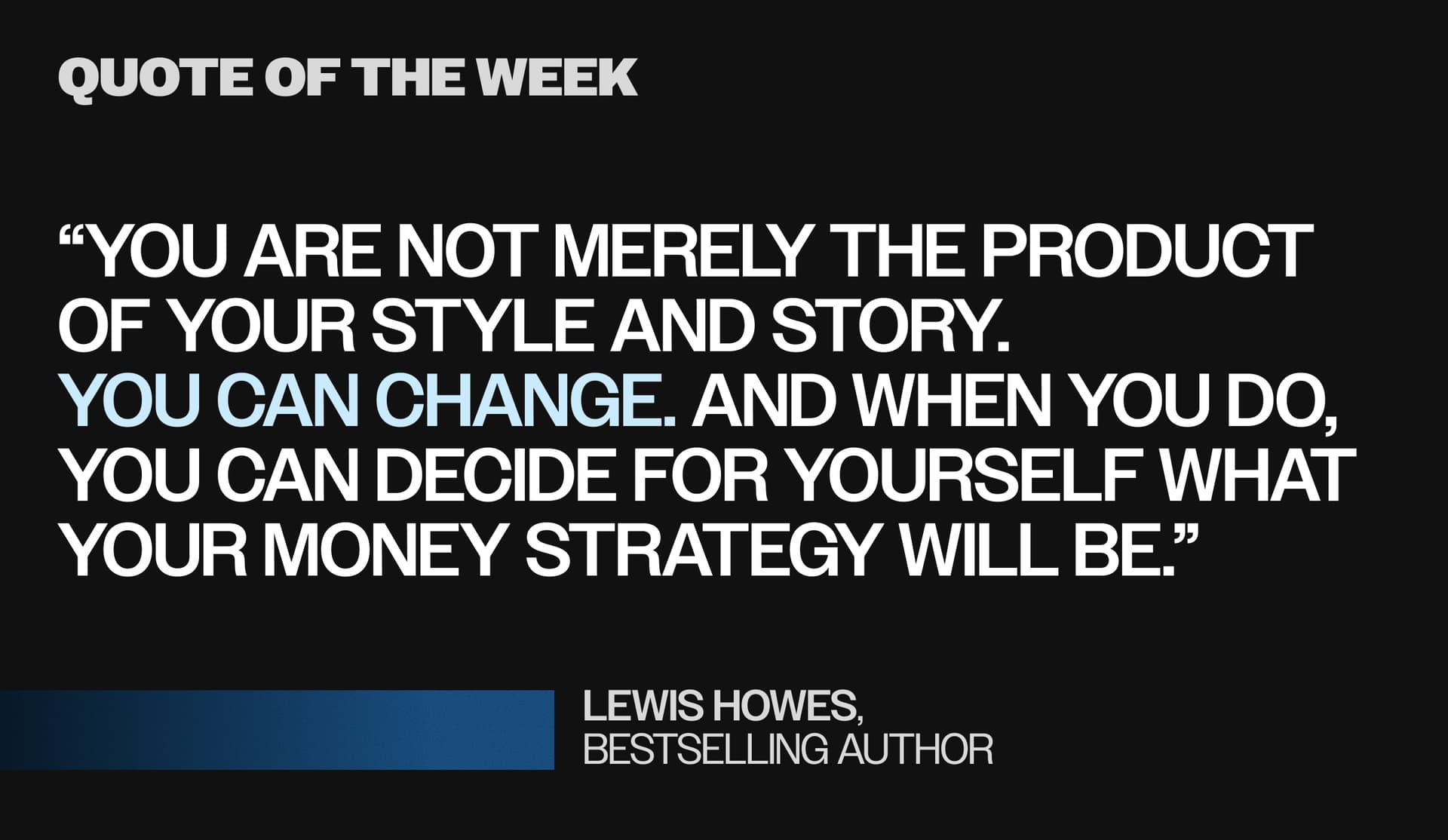
Howes captures this well when he wrote, “You are not merely the product of your style and story. You can change. And when you do, you can decide for yourself what your Money Strategy will be as part of who you choose to become.”
Read more from this issue of The Get:

Lisa Murphy
Lisa Murphy is a Toronto-based writer and former editor whose work has appeared in Reader’s Digest, The Globe & Mail, Chatelaine, Best Health and elsewhere. As a certified life and wellness coach, she loves sharing information that helps readers optimize their life.


The Get is owned by Neo Financial Technologies Inc. and the content it produces is for informational purposes only. Any views and opinions expressed are those of the individual authors or The Get editorial team and do not necessarily reflect the official policy or position of Neo Financial Technologies Inc. or any of its partners or affiliates.
Nothing in this newsletter is intended to constitute professional financial, legal, or tax advice, and should not be the sole source for making any financial decisions. Past performance is not a guarantee of future results. Neo Financial Technologies Inc. does not endorse any third-party views referenced in this content. Always do your due diligence before deciding what to do with your money.
© 2026 Neo Financial Technologies Inc. All rights reserved.