Published on December 8, 2025 · 4 min read
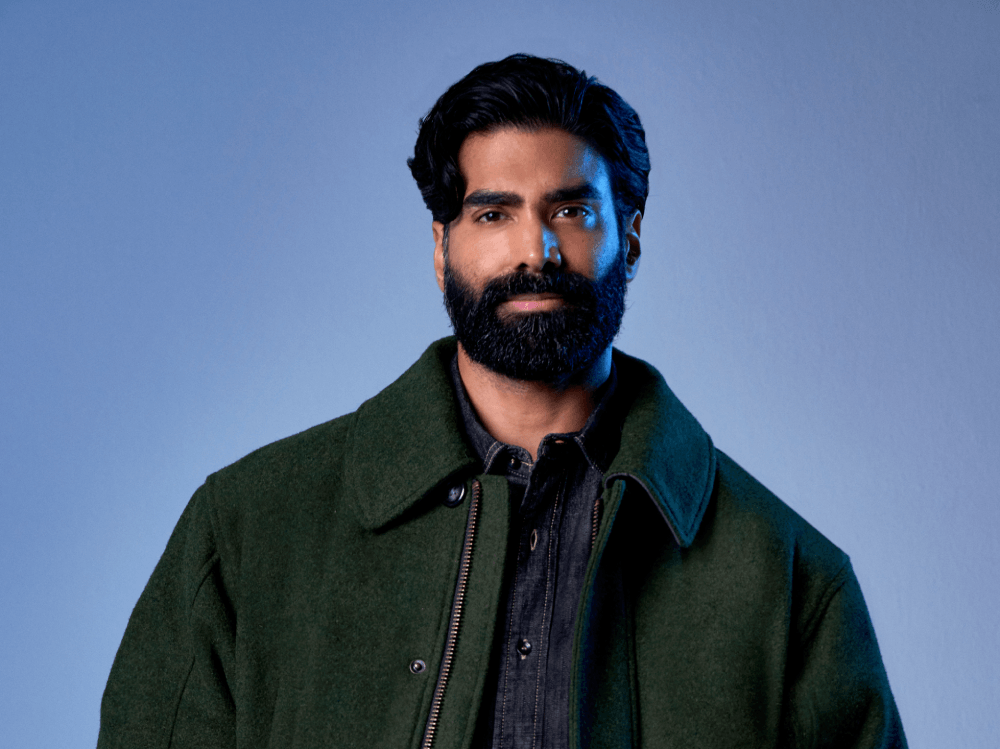
For this week’s MVP, we’re chatting with Canadian movie and television actor Raymond Ablack.
You may know Canadian actor Raymond Ablack from the stage as Young Simba in The Lion King; from network TV like Degrassi: The Next Generation, Orphan Black, or Workin’ Moms; in your earbuds on Audible audiobooks like this month’s Mistletoe Murders; or through streaming Netflix shows, Ginny & Georgia or Maid. (He’s well known for a certain, ahem, very memorable cowboy scene.)
Now in his mid-30s, the Torontonian has been performing since the age of 11—when he lived every child actor’s dream-come-true by being selected from an open call to star on the stage. But was his trajectory that simple? And how does a young actor possibly top that early success? This week, The Get talks to actor Ablack about following your dreams without losing your head.
When I Google your name plus “success,” I get the Simba story. Apparently you saw the play and said “I could do that!” But was it that easy?
Yeah, but that is distilled down a little. I remember the show in 2000, seeing some guys who are currently peers and friends of mine in Toronto, like Araya Mengesha who performed as Simba. I didn’t realize I could ever be an actor, but I remember walking out of the theatre and saying to my parents, “I could do what that kid did.” I used to sing in the shower and in the car, on my way to hockey practice. When I saw an ad in the newspaper for open-call auditions, I asked my mom if I could go. I think she took me to four different auditions over the course of a summer. I fluked into landing it. By November, I was on stage. That’s the real story.
After a win like that is it hard to go back to being a regular kid?
At that age, I didn’t have very much ego about what I’d done. I was sad to finish the run as Simba because I knew I wasn’t going to be doing that daily anymore. But I didn’t feel entitled for it to continue. It was just a fun thing that I got to do, and it might never happen again. I went to a performing arts high school—for choir—but not acting school. I auditioned for the theatre program at Ryerson, TMU now, but I didn’t get in. So, I studied radio and television arts in university and auditioned on the side.
After The Lion King, you were auditioning with everybody else and experiencing how hard it can be to land roles in acting. Was that difficult?
No, strangely—because again I don’t think I felt entitled. Neither did I feel really discouraged not to book things. I’d do an audition, I’d go home and I’d think nothing of it. Sometimes you’d get a pleasant surprise that you got a job—or you just never thought about it again. My siblings all had different activities, and acting was just one of mine. My parents were constantly chaperoning someone to something, so they were very supportive of all of us. But I don’t know that they were even aware that this would be the choice I would make as a career for the long term.
Do you feel as if you’ve quote-unquote made it yet?
I don’t, because I don’t think like that. I’m very grateful for where I’m at today. If you had told me five or six years ago if I would ever get to this point, I wouldn’t have believed you. “Made it” has connotations of resting on your laurels, and I don’t think I do that. I’ve got acting class tomorrow night. I’m still training the same way I did prior to having made it—in quotation marks. To me, having “made it” would create some sort of feeling in my stomach like I’m on the way down. I don’t feel that way at all.
What does success mean to you? What makes for a successful life?
It probably has to do with balance in career, family, romance—all these things that comprise a life. Being able to balance all those things and water all those plants fairly. I think that’s probably a life well lived.
Professionally, I’m just excited to try lots of stuff. I love the stage, audiobooks are fun and I love TV. But they all just feel like different mediums through which you can attempt storytelling. I don’t know that I’m going to stick the landing on everything, but I would do any one of these mediums as often as I can try.

Rosemary Counter
Rosemary Counter is a Toronto-based writer and journalist whose reporting and essays have appeared in The New York Times, Vanity Fair, The Guardian and others.



The Get is owned by Neo Financial Technologies Inc. and the content it produces is for informational purposes only. Any views and opinions expressed are those of the individual authors or The Get editorial team and do not necessarily reflect the official policy or position of Neo Financial Technologies Inc. or any of its partners or affiliates.
Nothing in this newsletter is intended to constitute professional financial, legal, or tax advice, and should not be the sole source for making any financial decisions. Past performance is not a guarantee of future results. Neo Financial Technologies Inc. does not endorse any third-party views referenced in this content. Always do your due diligence before deciding what to do with your money.
© 2026 Neo Financial Technologies Inc. All rights reserved.