By Rosemary Counter
Rosemary Counter is a Toronto-based writer and journalist whose reporting and essays have appeared in The New York Times, Vanity Fair, The Guardian and others.
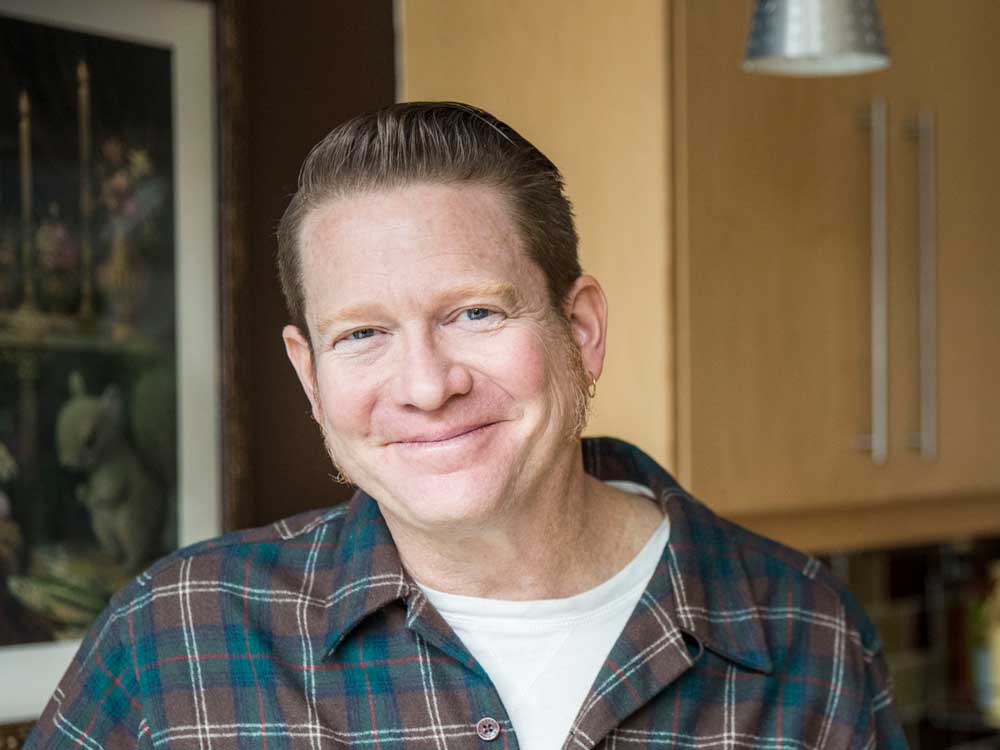
For this week’s MVP, we’re chatting with Steve Abrams.
As far as jobs go, brewmaster feels a little like a high-school graduation profile career aspiration come true. But it actually happened for lucky Steve Abrams, co-founder of craft beer favourite Mill Street Brewery. There’s a twist, though—he decided to stop drinking. In nine dry months, Abrams turned to non-alcoholic beer and it was, well, not good. Abrams used to call it “penalty-box beer.” (Key words here: used to.)
Canada’s notoriously bad near-beer lagged far behind the rest of the world’s, arguably because our real beer is so great. As well, it’s internationally known, thanks to craft breweries like Abrams’. You know where this story is going: Abrams decided to apply his skills to near beer, launching Harmon’s Craft Brewing. Dry January is the perfect time to try near-beer. In this week’s MVP, Abrams tells us all about his beer-drinking dream job, why he went dry and how the sober-ish movement is transforming Canada’s beer business.
Why would a brewmaster decide to quit drinking? And what brought you back to beer?
I’m not actually a brewmaster. My partner, Rob Doyle, however, is the brains behind the recipes; I’m the official taste tester. But after a long spell in the booze industry, I needed to cut back. I stopped drinking for what turned out to be about nine months. During that period, I missed beer. I love my beer. And it was difficult to find substitutes that really scratched the itch.
I was on a trip to San Diego with my family, and my wife sent me off to get some white wine at the local liquor store. I dutifully went, and they had a big wall of craft non-alcoholic beers. I grabbed one of each and headed back to our Airbnb and spent the rest of our holiday sampling. Some were meh but some were great innovative beers. I thought, how come we’re not doing this in Canada?
So… how come we’re not doing this in Canada?
Well, it depends where you live in Canada. Alberta has more non-alcoholic beer brands per capita than anywhere else in the country. Meanwhile, in some countries in Europe, like Spain and Sweden, non-alcoholic beer can make up to 15% of all the beer sold.
It’s wild how huge a part it is in the culture. But Canada has been slow to the game. Maybe Canadians are a little more conservative or risk averse, or maybe we just don’t like trying new things.
Or maybe we just really like alcohol?
Actually, beer and wine sales have fallen off a cliff in the last two years. That’s a fact. Consumption went way up at the start of the pandemic but then way down, 15% to 20%. I’m in my late 50s, and my generation, like our parents and grandparents, were big drinkers. Millennials and younger generations have cut back and people aren’t drinking beer like they used to. If you didn’t grow up drinking beer, you’re not going to suddenly like non-alcoholic beer. But, if you love drinking beer and want to consume less alcohol—those are my customers.
How would you say Harmon’s beer compares to regular beer?
We’re developing recipes to kind of make up for the fact that there’s no alcohol in it. That bite that you’d get from the booze comes from hops or a more balanced flavour. We don’t just de-alcoholize our beer; it’s actually brewed and fermented for about three or four days, which is relatively new in the industry. We’re learning how to use new [yeast] strains and make them behave like regular spirits for something that still scratches that itch but won’t cause you to blow over when you’re driving.
Is it hard to convince a zythophile, or beer fan, to try a non-alcoholic beer?
Sampling helps so much, because people are surprised it tastes so good. We do beer events and all kinds of festivals to engage people—all the advertising in the world doesn’t make up for the fact that people have to taste it. Once they do, we find people are very receptive. I don’t just mean sober people; something like 90% of our customers also drink regular beer—myself included. It’s just about a little more balance in life.
Is yours just an absolute dream job? What would your 16-year-old self think of your job?
I’ve had a lot of different careers on the way here—musician, English teacher, journalist, writer—so if I had a time machine I’d go back and warn him. How I wound up in this industry is a whole other story. I basically fell into Mill Street after 9/11, thinking that if the world was going to end tomorrow, I should at least be doing something I love.

The Get is owned by Neo Financial Technologies Inc. and the content it produces is for informational purposes only. Any views and opinions expressed are those of the individual authors or The Get editorial team and do not necessarily reflect the official policy or position of Neo Financial Technologies Inc. or any of its partners or affiliates.
Nothing in this newsletter is intended to constitute professional financial, legal, or tax advice, and should not be the sole source for making any financial decisions. Past performance is not a guarantee of future results. Neo Financial Technologies Inc. does not endorse any third-party views referenced in this content. Always do your due diligence before deciding what to do with your money.
© 2026 Neo Financial Technologies Inc. All rights reserved.