Updated on June 24, 2026 · Published on May 15, 2026 · 6 min read
By Janet Gray, an advice-only certified financial planner with Money Coaches Canada
As told to Ian Portsmouth.
Here’s the answer to this week’s reader question.
How much money does a person with no company pension require to live after 60?
—Susan
How much money do you need to retire at 60 in Canada
One of the most common questions Canadians ask about retirement planning is, “How much money will I need?” But whether you plan to retire at 60 or at another age, there’s no universal magic dollar amount. Some 60-year-olds have paid off their mortgages, while others are only halfway through. Some still pay for their kids’ tuition, while others are grandparents with no kids at home. Some people have grand plans for their retirement, but the “sailboat in the Bahamas” vision isn’t realistic for most Canadians.
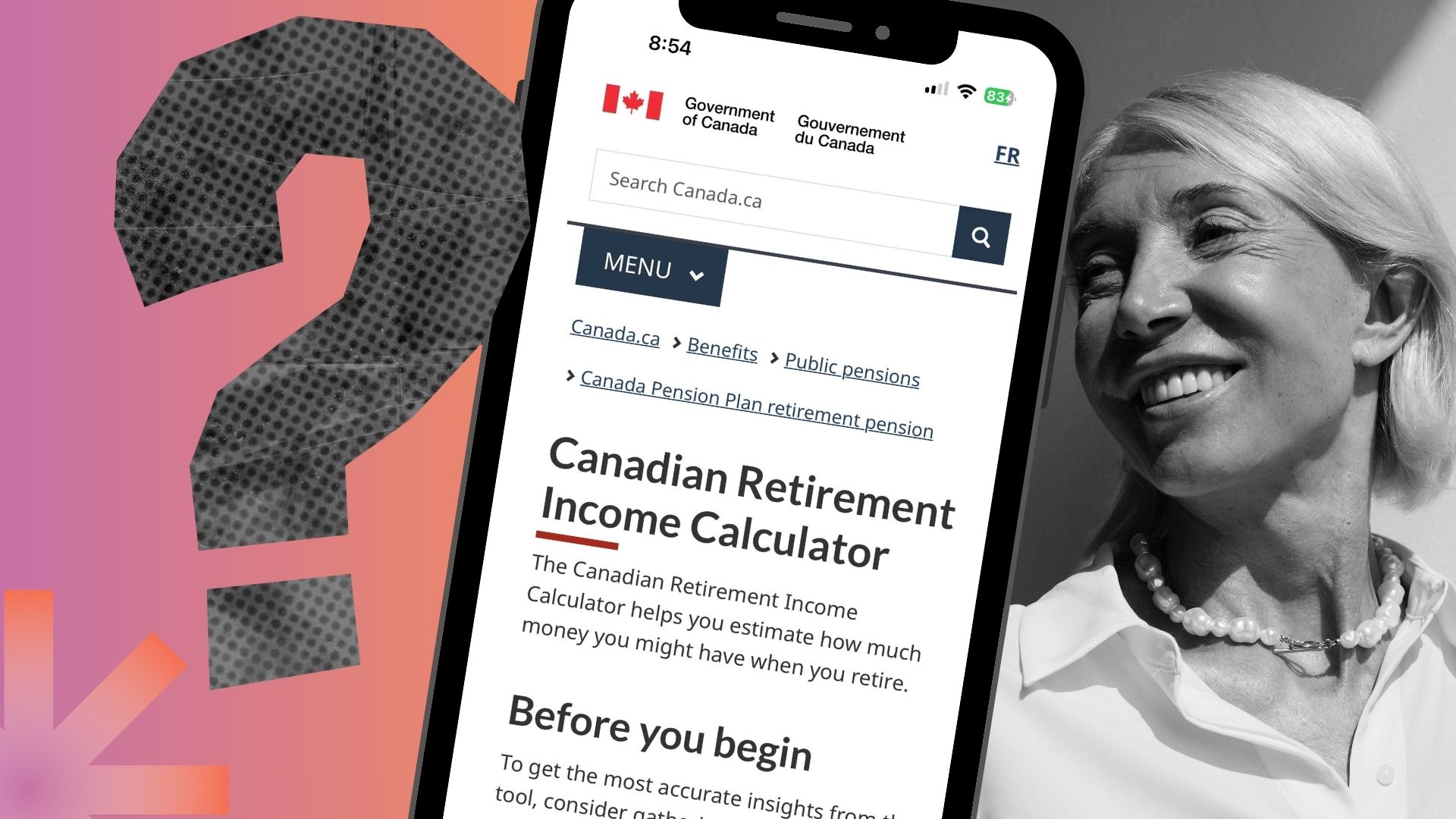
The National Institute on Ageing recently launched its interactive tool that estimates retirement costs for singles and couples depending on a few key variables, such as home ownership status and health care needs. According to the calculator, a couple who lives in Montreal, owns a home and doesn’t require home care, will currently spend about $24,000 a year to achieve a “modest” lifestyle and more than $42,000 to live a “comfortable life.” Move the same couple to a retirement home in Toronto, and they’ll need about $67,000 to live modestly and $106,000 to live comfortably. But even that range is just a starting point, because your costs are yours alone to determine.
To figure out what your life will cost in retirement, start with what it costs today. Most people don’t know how much they spend now. But even when you ask them to forecast into the future, they might say, “I earn $100,000 a year and save $10,000 of it. Therefore, I’ll need $90,000 a year in my retirement.”
That number will probably be incorrect, because your situation will change as you age: you’ll likely drop into a lower tax bracket, for example, and go down to a single car in the garage.
So, determine how much you spend now, then adjust for inflation and the costs that will decrease or disappear. This will leave you with a much more realistic baseline for determining how much income you’ll need each year of your retirement. Just be sure to factor in the occasional costs of big-ticket items like home renovations, a new car and a child’s wedding.
The math for how much money you need to retire
Here’s what you need to calculate your retirement savings needs.
- Your years: Current age, planned retirement age and life expectancy.
- Your net worth: Add up your assets and subtract your liabilities.
- Your retirement income: List any of the following you expect to have in retirement: CPP/QPP (found on Service Canada/Retraite Québec), OAS and other income (like renting out a cottage, investment dividends). Typically workplace pensions (defined benefit/contribution) would be included here.
- Your lifestyle expenses: Think of everything, from food and home to travel and hobbies, and more.
Don’t forget: Add on estimates for inflation (usually 2.5%), income tax, savings and investment interest and growth. You might be wondering about expenses that usually materialize or increase as we age, such as health care or supported living. Indeed, those costs pile up over time for most people. But that doesn’t mean your total spending will change dramatically during retirement; rather, you’re likely to spend a similar amount on different things.
Think of your retirement as having three stages: the go-go, slow-go and no-go years. In the go-go years of early retirement, you might be healthy and spend a lot on travel. At 75, you might start your slow-go years, so some of your travel spending could shift towards health care. And by 85, you could be in your no-go years, when travel spending is replaced entirely by the cost of live-in care or a retirement residence.
Plan for health care—it may get expensive
Health care costs between your early retirement age and turning 65 also warrant a closer look. Losing your employer’s group benefits plan is not a trivial event: plan for $3,000 to $6,000 a year in out-of-pocket health care costs until you qualify for provincial seniors’ benefits. In Ontario, for example, you’re not covered by government benefits for medications, eye exams or certain dental benefits until you turn 65. Beyond age 65, budget roughly $300 a month for a private health insurance plan or set that amount aside as a self-insurance reserve if you’re in good health and prefer not to buy coverage.
Add up your income
Once you have a general sense of your costs during retirement, add up your sources of retirement income, such as Canada Pension Plan (CPP) and Old Age Security (OAS) benefits, personal savings for retirement, and any assets you might sell, such as a vacation property. If your annual retirement income will cover your costs, then great. But if you come up short, now’s the time to start making up for the shortfall—or adjusting your spending forecast.
A word of caution if you’re calculating your retirement costs as a couple: one of you will face a new financial situation when the other dies. For instance, OAS does not transfer to a surviving spouse. And the survivor may receive only a modest top-up to their own CPP rather than inheriting their partner’s full benefit. Meanwhile, household costs drop by about 25% when one partner dies—not 50%, as many people expect. (Read: How to manage the costs of being single.)
Don’t forget inflation
As you do your calculations, don’t forget to account for inflation. At an inflation rate of 2.5% per year, overall costs double roughly every 29 years. Unfortunately, most sources of retirement income, such as registered retirement savings plans (RRSPs), aren’t guaranteed to keep up with inflation.
A few are, including the CPP benefit—which makes it such an important factor in planning for an early retirement. That’s because the amount of your CPP benefit is determined partially by your age when you begin to take it. If you start drawing a CPP benefit at age 65, you’ll receive 100% of your monthly entitlement, indexed annually to the consumer price index. Wait till you’re 70 to receive your first payment, and you’ll get 42% more per month. But if you start at age 60, you’ll get 36% less. For many Canadians, that’s a significant amount of inflation-protected income to give up over the course of a retirement that, at the average life expectancy, will last nearly 23 years.
Whether that trade-off makes sense for you depends partly on what other income you have access to in the meantime. If you ever do get a defined-benefit pension, check whether it includes a bridge benefit—a top-up that supplements your income until you turn 65 and become eligible for full CPP. If it does, you can afford to wait for the higher CPP amount without a gap in your cash flow. If you don’t have a bridge benefit, you’ll need to think carefully about how you’d fund the years between early retirement and the age at which you start drawing CPP.
When to start planning (and saving) to retire
As a general rule of thumb, serious planning for retirement starts at least 10 years before your desired retirement age. (That’s different from saving for retirement, which really is a case of “the sooner, the better.”) But be flexible about your retirement age, because life rarely accommodates hard stops. Take money out of the equation, too. “What am I going to do for 30 years of retirement?” is actually a better question than how much money will I need. Retirement planning isn’t just a financial exercise—it’s a life-planning exercise.
Ian Portsmouth is an award-winning writer and editor specializing in business and personal finance. He is based in Toronto.
Read more from this issue of The Get:


The Get is owned by Neo Financial Technologies Inc. and the content it produces is for informational purposes only. Any views and opinions expressed are those of the individual authors or The Get editorial team and do not necessarily reflect the official policy or position of Neo Financial Technologies Inc. or any of its partners or affiliates.
Nothing in this newsletter is intended to constitute professional financial, legal, or tax advice, and should not be the sole source for making any financial decisions. Past performance is not a guarantee of future results. Neo Financial Technologies Inc. does not endorse any third-party views referenced in this content. Always do your due diligence before deciding what to do with your money.
© 2026 Neo Financial Technologies Inc. All rights reserved.