By Julien Brault, founder of MooseMoney.
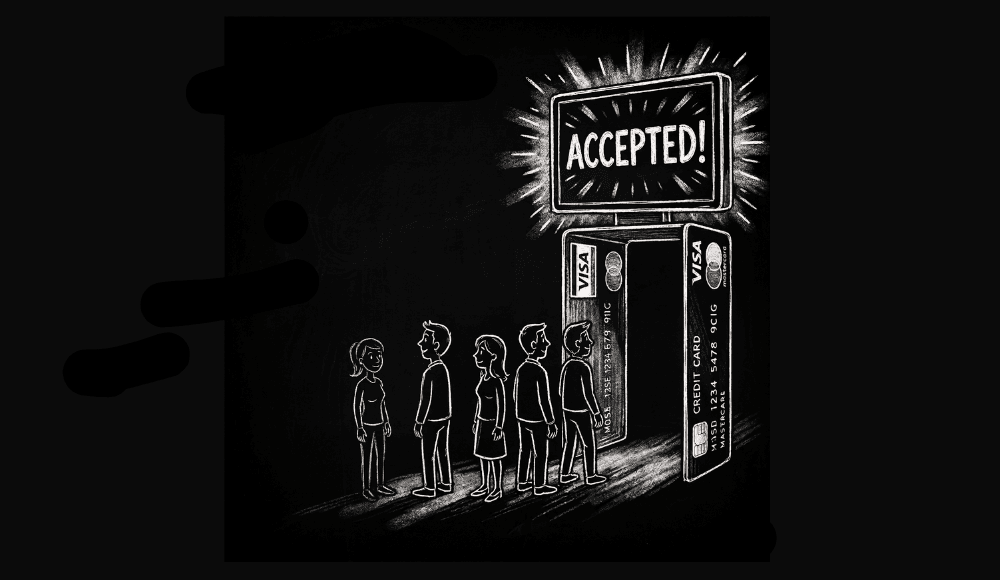
When you apply for an instant acceptance credit card in Canada, an automated system pulls your credit file, runs your data through a scoring algorithm, and spits out a yes or no within seconds. The speed has nothing to do with how lenient the card issuer is. It simply reflects how much of the decision-making process the issuer has automated. Some issuers, like Neo Financial, let the algorithm handle every decision without manual intervention. Others, particularly the big banks, build in extra time so a human can review borderline applications.
Richard Goyder, Chief Credit Officer at Neo Financial, put it plainly: "Most credit application decisions are made automatically these days. The reason some big banks make you wait days before giving you an answer is either because their systems are slower or because they want to have the time to perform a manual review of some edge cases that their systems was unsure of. At Neo, however, we allow our algorithm to make all the decisions."
That means a card advertised with instant acceptance is not necessarily easier to get than one that takes five business days. The approval criteria, including your credit score, income, and existing debt obligations, still determine the outcome. You are simply getting the answer faster.
What Canadians Actually Need to Know Before Applying
Every credit card application in Canada triggers a hard inquiry on your credit report, whether the decision takes 60 seconds or seven business days. That hard inquiry temporarily lowers your credit score. Equifax and TransUnion, the two credit bureaus operating in Canada, both record these inquiries, and multiple applications in a short window can signal financial distress to future lenders.
This matters because some applicants, after being declined for one instant acceptance card, immediately apply for another. That second hard inquiry drops their score further while offering no benefit. Neo Financial's Goyder addressed this directly: "Once you've made an application for a Neo card, you can't make another application for 90 days. That said, if you actually think that there was a mistake or something went wrong, you can always contact our call center and talk to somebody and they may be able to help."
Not every issuer enforces a 90-day cooling period, but the credit score damage from rapid-fire applications is universal. A practical approach is to check whether you are likely to qualify before you apply. Some issuers, including Neo and American Express, now offer pre-qualification tools that perform a soft inquiry, which does not affect your score, before you formally submit an application.
When you do apply, you should use your legal name exactly as it appears on your bank records, enter your current address, and report your income carefully. Even part-time or student income counts for many cards, but discrepancies between your application and your credit file can trigger a manual review or outright decline.
What to Do if You Get Declined
A decline is not the end of the process, but how you respond to it matters. Applying again immediately with a different issuer compounds the credit score damage without addressing the underlying reason you were turned down.
Checking your own credit score through free tools offered by several Canadian banks and credit monitoring apps, does not trigger a hard inquiry and gives you a realistic picture of where you stand before you apply. Most unsecured cards with competitive rewards require a score of at least 660 to 725, depending on the issuer. If your credit score is lower, however, your only option might be to stick to a secured credit card like the Secured Neo Mastercard.
Related Posts
View All
4 Neo Credit Cards That Will Help You Build Your Credit Up
What makes Neo's lineup unique is that every card it offers comes in two versions: a regular unsecured credit card and a secured version.
4 Types of Credit Cards So Easy to Acquire Literally Everyone Can Get Them
There are now 4 types of cards that any Canadian can easily get and that will allow you to order a Uber or book a plane ticket online like a normal person.

The 7 Cardinal Sins of Credit Cards in Canada and How to Avoid Their Pitfalls
While many Canadians are able to use credit cards without getting into debt, if you recognize yourself in any of the seven following habits, you are better off leaving the credit card in the drawer until you can approach it differently.