By Janet Gray, an advice-only Certified Financial Planner with Money Coaches Canada
As told to Ian Portsmouth.
Here’s the answer to this week’s reader question.
“At what age can I receive my Old Age Security and Canada Pension Plan benefits?”
—Jim
The age you can expect to receive OAS and CPP
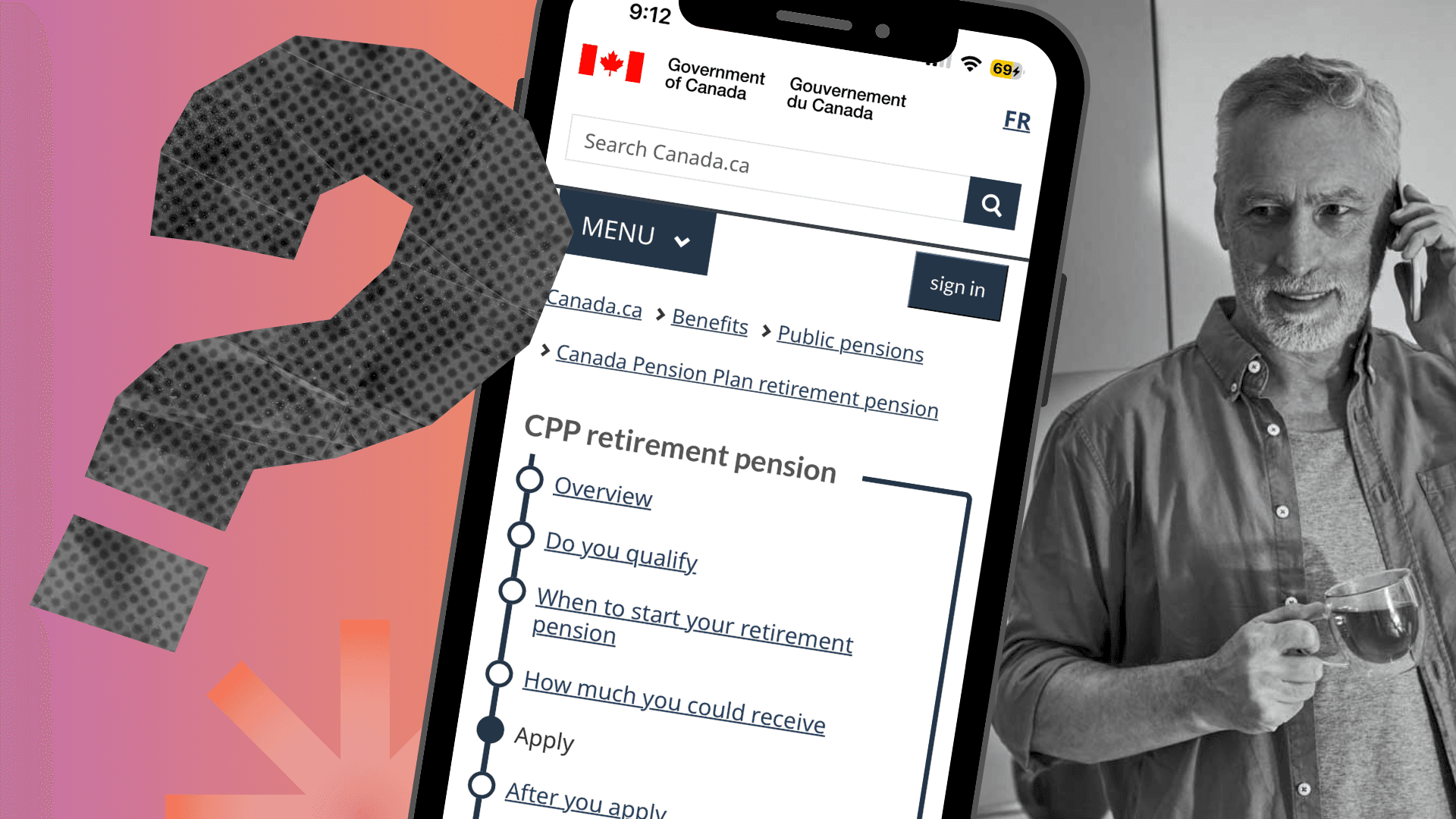
One of the most common questions we financial planners get is, “When can I receive my Canada Pension Plan and Old Age Security benefits?” But that’s actually not the most important question to answer about the CPP and OAS programs. You can start collecting CPP benefits between the ages of 60 and 70, and OAS benefits between 65 and 70.
The real ask is: When should you start collecting CPP and OAS? The longer you delay, the larger your monthly benefits will be—but the answer is not as simple as “delay as long as you can.” The best timing depends on many factors, such as other sources of income and the tax you’ll have to pay on it.
Begin your own analysis by estimating how much you could receive from each program depending on when you begin collecting benefits.
How much is OAS for 2026?
As of January 2026, the maximum OAS benefit was $742.31 per month for people aged 65 to 74, and $816.54 per month for those 75 and older. But your actual payout will depend on several factors. The biggest one is how long you’ve lived in Canada after age 18, to a maximum of 40 years. For instance, if you’ve lived in Canada for 20 years when you start collecting OAS, you’ll be eligible for half the benefit.
For each month you delay collecting OAS after turning 65, your monthly benefit grows by 0.6%, up to a maximum increase of 36% by age 70. Someone who has lived in Canada for at least 40 years and waits until age 70 to collect OAS would receive $1,009.54 per month. OAS payments are also subject to a recovery tax, or “clawback,” equal to $0.15 for every $1 that your net taxable income exceeds a certain threshold in the previous tax year. In the 2025 tax year, for example, the threshold was about $93,500. If you earned $10,000 more than that, your OAS benefit in 2026 would be reduced by $1,500 per year, or $125 per month.
Don’t forget, the OAS program also includes the Guaranteed Income Supplement (GIS), which goes to low-income OAS recipients, and the Allowance, which provides additional support to low-income spouses aged 60 to 64 of GIS recipients. The government’s OAS benefits estimator tool can help you determine your eligibility and potential payouts from these programs.
How much is CPP for 2026?
As for CPP, in January 2026, the maximum monthly benefit for someone who started collecting at age 65 was $1,507.65. But the average benefit at age 65 as of October 2025 was only about half that amount: $803.76 per month. The main reason for the gap is that CPP benefits are based largely on the contributions you and your employer make during your working years.
To earn the maximum benefit, you would have to make the maximum allowable contribution each year for 40 years. Many people don’t contribute the maximum each year and don’t contribute for that long.
You can also alter your monthly CPP benefit by delaying the start of payments, just like with OAS. Benefits grow by 0.7% for every month you delay between ages 65 and 70, to a maximum increase of 42%.
On the other hand, your monthly benefit shrinks by 0.6% for every month you take CPP before age 65. Someone who claims CPP on their 60th birthday will receive 36% less per month—for life—than they would have received by waiting until 65.
You can find out how much you’ve contributed to CPP and get estimates of your monthly benefit at different retirement ages from Service Canada.
There are a couple of other things worth knowing about CPP and OAS benefits: they are taxable income, and their payouts rise in line with inflation, as measured by the Consumer Price Index.
When to request CPP and OAS
So, back to the main question: When should you claim CPP and OAS? If you have little or no income, you may want to take one or both as early as possible. Starting earlier can also make sense if your health is poor or your family history suggests limited longevity—in other words, take the money while you can. The downside is that if you live longer than expected, you may receive less in total over your lifetime.
Waiting can make sense if you’re in good health, expect to live longer, and can rely on other income sources—such as registered retirement savings plans (RRSPs), proceeds from the sale of your home, a private pension or a job you hold in retirement—in the meantime. If your taxable income from those sources is high enough, delaying CPP and OAS could also help you avoid moving into a higher tax bracket. Why add that income to your taxable total just to give 40% or 50% of it back to the government?
There are also timing rules to consider. You must apply for CPP benefits three months in advance of your first payment, although you can claim up to 11 months of benefits retroactively. In most cases, OAS payments start automatically unless you choose to delay them, which you can do up to 11 months before or six months after you turn 65.
Have a question for us? Send it to TheGet@neofinancial.com.
Ian Portsmouth is an award-winning writer and editor specializing in business and personal finance. He is based in Toronto.
Read more from this issue of The Get:
- Canada’s economy: Looks great on paper, but how does it feel to you?
- MVP: Actor Robert Bazzocchi opens up on flipping the script on success
- Where did my raise go?
- True or False: You can turn your hobby into a side hustle
-----------------------------------------------------------------------------------
The Get is owned by Neo Financial Technologies Inc. and the content it produces is for informational purposes only. Any views and opinions expressed are those of the individual authors or The Get editorial team and do not necessarily reflect the official policy or position of Neo Financial Technologies Inc. or any of its partners or affiliates.
Nothing in this newsletter is intended to constitute professional financial, legal, or tax advice, and should not be the sole source for making any financial decisions. Past performance is not a guarantee of future results. Neo Financial Technologies Inc. does not endorse any third-party views referenced in this content. Always do your due diligence before deciding what to do with your money.
© 2026 Neo Financial Technologies Inc. All rights reserved.
Related Posts
View All
Canada’s economy: Looks great on paper, but how does it feel to you?
The math isn’t mathing for some Canadians—and for some finance experts. Where’s the reality gap and how to make sense of the economic headlines?

You can turn your hobby into a side hustle
We’ve all heard about someone who turned profit from their hobby. But what’s the backstory? Find out how a side passion can create an income stream—and some joy.

Actor Robert Bazzocchi opens up on flipping the script on success
A case for broadening your skills, standing out from the crowd and more tips, from Robert Bazzocchi.